概要
ホストに会いましょう
旅程
Amazing Sunrise private tour of Rome (2hrs)
0 (0)
Amazing Sunrise private tour of Rome (2hrs)
0 (0)
アクティビティ期間 (2 hours)
Extreme
主催 English
キャンセルされた場合の返金はありません
今すぐ予約して後で支払い、柔軟に対応しながらスポットを確保しましょう。
何をしますか
Experience the beauty and history of Rome's iconic landmarks on our private 2-hour tour. Visit the Pantheon, one of the most impressive ancient buildings in Rome, and marvel at the Trevi Fountain, a stunning baroque masterpiece.
ツアーハイライト
Experience Rome in tranquility on this private sunrise tour with a chauffeur. Avoid the crowds that often obscure the city's most popular landmarks. Set off in the early morning hours to see the Colosseum in the light of dawn, stand in St. Peter's Square with just the birds as company, and enjoy the busiest corners of the city in peace and quiet.
何が含まれていますか?
- Wheelchair accessible
- Transportation is wheelchair accessible
- Stroller accessible
- Near public transportation
- Infant seats available
- Surfaces are wheelchair accessible
含まれていないものは何ですか?
- Confirmation will be received at time of booking
- Most travelers can participate
- This is a private tour/activity. Only your group will participate
ホストに会いましょう

Smiler Adventure Co.
検証済みホスト
以降のホスト 2024
旅程
この日はお食事は付いておりません。
この日は宿泊は含まれておりません。
ここが出発点です
Piazza Navona
1
Piazza Navona
停止: 10 minutes
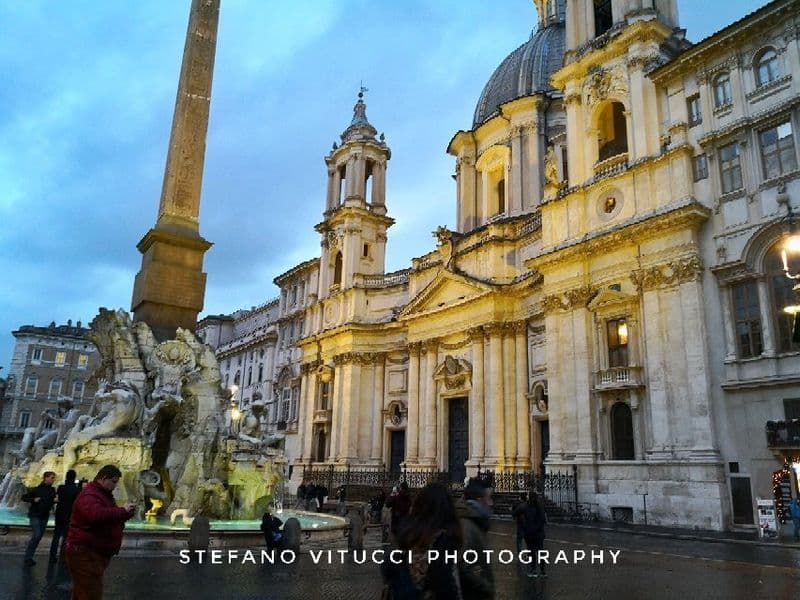
It is built on the site of the Stadium of Domitian, built in the 1st century AD, and follows the form of the open space of the stadium. The ancient Romans went there to watch the agones ("games"), and hence it was known as "Circus Agonalis" ("competition arena"). It is believed that over time the name changed to in avone to navone and eventually to navona.
2
Trevi Fountain
停止: 10 minutes

Trevi Fountain is the most beautiful fountain in Rome. Measuring some 20 meters in width by 26 meters in height, Trevi Fountain is also the largest fountain in the city. The origins of the fountain go back to the year 19 B.C., in which period the fountain formed the end of the Aqua Virgo aqueduct. The first fountain was built during the Renaissance, under the direction of Pope Nicholas V. The final appearance of the Trevi Fountain dates from 1762, when after many years of works at the hand of Nicola Salvi, it was finalized by Giuseppe Pannini.
Interestingly enough, the name of Trevi derives from Tre Vie (three ways), since the fountain was the meeting point of three streets.
3
Colosseum
停止: 10 minutes

The Roman Colosseum or Coliseum, originally known as the Flavian Amphitheatre, was commisioned in AD 72 by Emperor Vespasian. It was completed by his son, Titus, in 80, with later improvements by Domitian.
The Colosseum is located just east of the Roman Forum and was built to a practical design, with its 80 arched entrances allowing easy access to 55,000 spectators, who were seated according to rank. The Coliseum is huge, an ellipse 188m long and 156 wide. Originally 240 masts were attached to stone corbels on the 4th level.
4
Pantheon
停止: 10 minutes
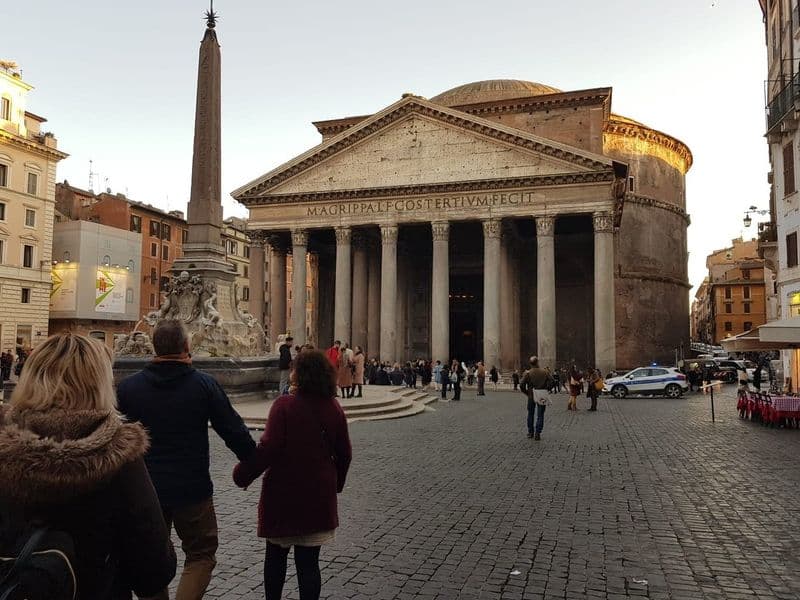
The Pantheon (Latin: pantheum) is the best-preserved building from ancient Rome and was completed in c. 125 CE in the reign of Hadrian. Its magnificent dome is a lasting testimony to the genius of Roman architects and as the building stands virtually intact it offers a unique opportunity for the modern visitor to step back 2,000 years and experience the glory that was Rome.
5
Piazza Di Spagna
停止: 10 minutes
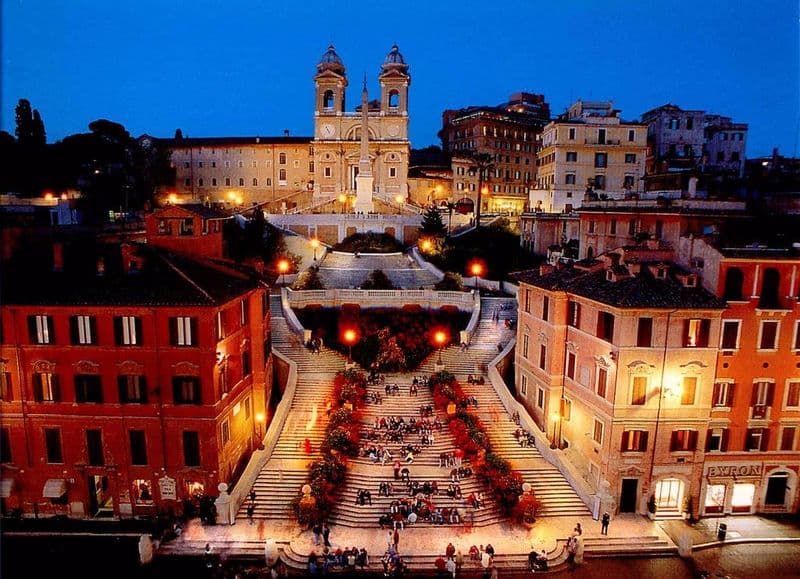
The Spanish Steps are a set of steps in Rome, Italy, climbing a steep slope between the Piazza di Spagna at the base and Piazza Trinità dei Monti, dominated by the Trinità dei Monti church at the top. The monumental stairway of 174 steps (the slightly elevated drainage system is often mistaken for the first step) was built with French diplomat Étienne Gueffier’s bequeathed funds of 20,000 scudi, in 1723–1725, linking the Bourbon Spanish Embassy, and the Trinità dei Monti church that was under the patronage of the Bourbon kings of France, both located above — to the Holy See in Palazzo Monaldeschi located below. The stairway was designed by architects Francesco de Sanctis and Alessandro Specchi.
6
Piazza del Popolo
停止: 10 minutes
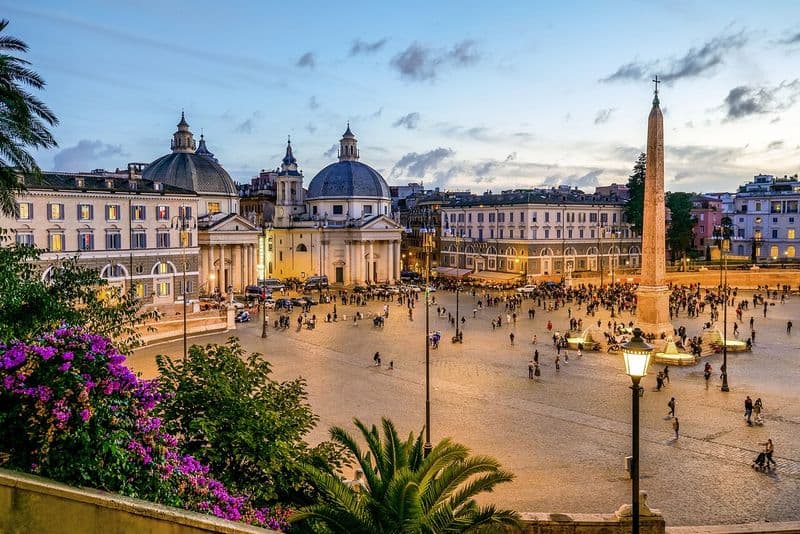
Piazza del Popolo is a large urban square in Rome. The name in modern Italian literally means "People's Square", but historically it derives from the poplars (populus in Latin, pioppo in Italian) after I which the church of Santa Maria del Popolo, in the northeast corner of the piazza, takes its name.The piazza lies inside the northern gate in the Aurelian Walls, once the Porta Flaminia of ancient Rome, and now called the Porta del Popolo. This was the starting point of the Via Flaminia, the road to Ariminum (modern-day Rimini) and the most important route to the north. At the same time, before the age of railroads, it was the traveller's first view of Rome upon arrival. For centuries, the Piazza del Popolo was a place for public executions, the last of which took place in 1826.
7
Piazza del Campidoglio
停止: 10 minutes
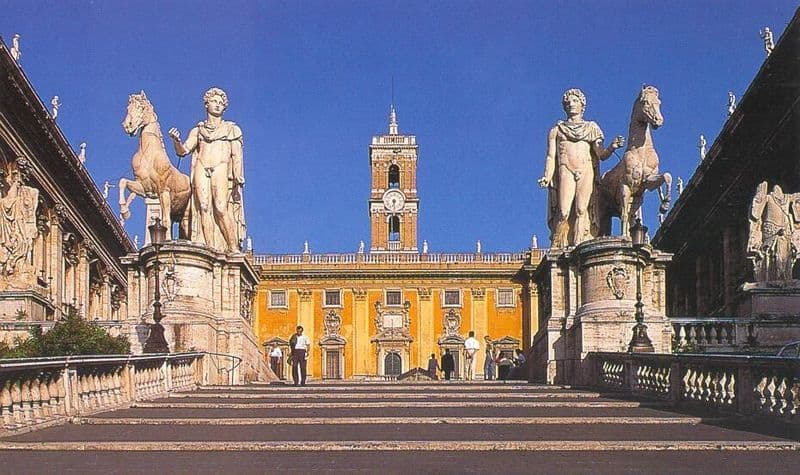
The Capitolium or Capitoline Hill between the Forum and the Campus Martius, is one of the Seven Hills of Rome. The hill was earlier known as Mons Saturnius, dedicated to the god Saturn.[citation needed] The word Capitolium first meant the temple of Jupiter Optimus Maximus later built here, and afterwards it was used for the whole hill (and even other temples of Jupiter on other hills), thus Mons Capitolinus (the adjective noun of Capitolium). In an etymological myth, ancient sources connect the name to caput ("head", "summit") and the tale was that, when laying the foundations for the temple, the head of a man was found, some sources even saying it was the head of some Tolus or Olus. The Capitolium was regarded by the Romans as indestructible, and was adopted as a symbol of eternity.
8
Piazza Venezia / Ancient City
停止: 10 minutes

Piazza Venezia is the central hub of Rome, Italy, in which several thoroughfares intersect, including the Via dei Fori Imperiali and the Via del Corso. It takes its name from the Palazzo Venezia, built by the Venetian Cardinal, Pietro Barbo (later Pope Paul II) alongside the church of Saint Mark, the patron saint of Venice. The Palazzo Venezia served as the embassy of the Republic of Venice in Rome.
One side of the Piazza is the site of Italy's Tomb of the Unknown Soldier in the Altare della Patria, part of the Monument to Vittorio Emanuele II, first king of Italy.
9
St. Peter's Square
停止: 10 minutes

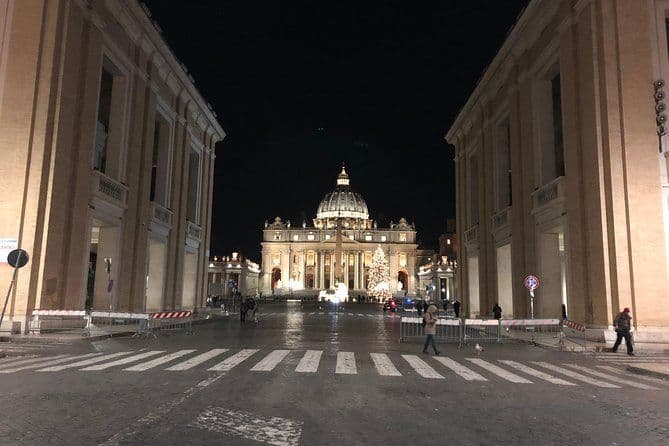
St. Peter's Square is a large plaza located directly in front of St. Peter's Basilica in the Vatican City, the papal enclave inside Rome, directly west of the neighborhood (rione) of Borgo. Both the square and the basilica are named after Saint Peter, an apostle of Jesus considered by Catholics to be the first Pope. At the centre of the square is an ancient Egyptian obelisk, erected at the current site in 1586. Gian Lorenzo Bernini designed the square almost 100 years later, including the massive Doric colonnades, four columns deep, which embrace visitors in "the maternal arms of Mother Church". A granite fountain constructed by Bernini in 1675 matches another fountain designed by Carlo Maderno in 1613.
10
Campo De' Fiori
停止: 10 minutes
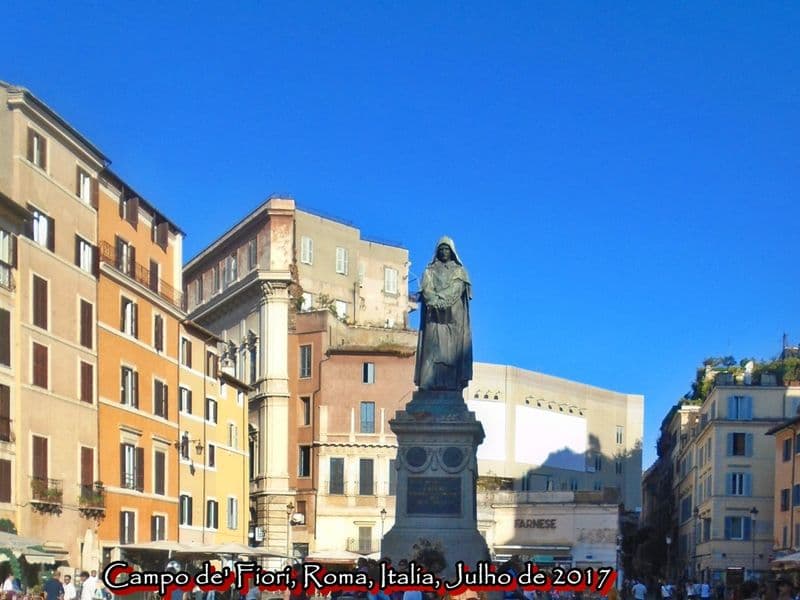
Campo de' Fiori, literally "field of flowers" is a rectangular square south of Piazza Navona in Rome, Italy, at the border between rione Parione and rione Regola. It is diagonally southeast of the Palazzo della Cancelleria and one block northeast of the Palazzo Farnese. Campo de' Fiori, translated literally from Italian, means "field of flowers". The name dates to the Middle Ages when the area was a meadow.
11
Foro Romano
停止: 10 minutes
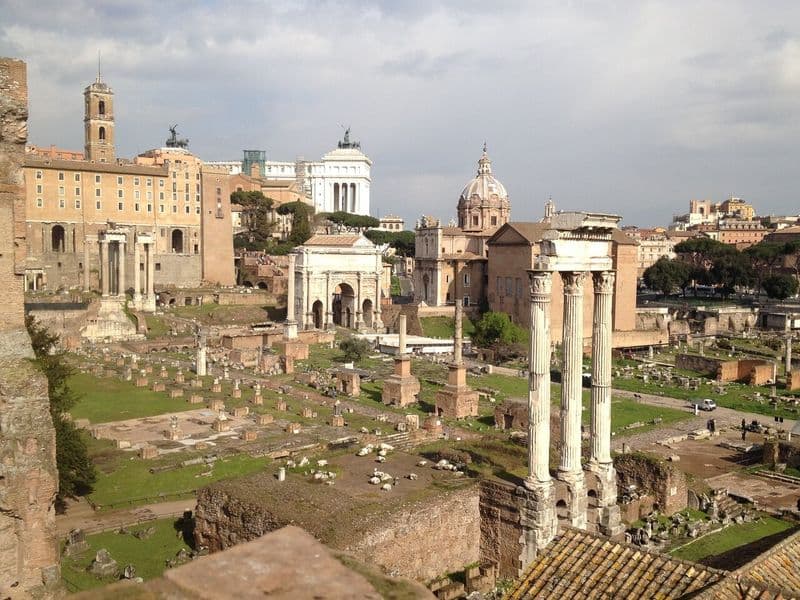
View from the Capitol Hill
The Roman Forum, also known by its Latin name Forum Romanum, is a rectangular forum (plaza) surrounded by the ruins of several important ancient government buildings at the center of the city of Rome. Citizens of the ancient city referred to this space, originally a marketplace, as the Forum Magnum, or simply the Forum. For centuries the Forum was the center of day-to-day life in Rome: the site of triumphal processions and elections; the venue for public speeches, criminal trials, and gladiatorial matches; and the nucleus of commercial affairs. Here statues and monuments commemorated the city's great men. The teeming heart of ancient Rome, it has been called the most celebrated meeting place in the world, and in all history. Located in the small valley between the Palatine and Capitoline Hills, the Forum today is a sprawling ruin of architectural fragments and intermittent archaeological excavations attracting 4.5 million or more sightseers yearly.
これでツアーは終了です。
ここからは自分のペースで自由に探索できます。
世界中の壮大な冒険
人気の体験