Gambaran Keseluruhan
Berjumpa dengan tuan rumah anda
Jadual perjalanan
Tokyo 6hr Instagram Highlights Private Tour with Licensed Guide
5 (0)
Tokyo 6hr Instagram Highlights Private Tour with Licensed Guide
5 (0)
Tempoh Aktiviti (6 hours)
Moderate
Dihoskan dalam Japanese, English
Bayaran balik penuh jika dibatalkan sehingga 24 jam sebelum pengalaman bermula
Rizab sekarang & bayar kemudian, selamatkan tempat anda sambil tetap fleksibel.
Apa yang anda akan lakukan
Join us for a 6-hour private tour of Tokyo's Instagram highlights with a licensed guide.
Sorotan lawatan
On this private guided tour, you'll visit a carefully curated selection of photo-worthy spots, perfect for boosting your Instagram game. Skip the hours of research as your guide takes you to some of Tokyo's most iconic and photogenic locations, including Harajuku, Sensoji Temple, Shibuya Crossing, and more. Capture stunning shots while learning about the city's popular attractions along the way.
Apa yang disertakan?
- Licensed Local English Speaking Guide
- Customizable Tour of your choice of 34 sites from 'What to expect' list
- Meet up with guide on foot within designated area of Tokyo
Apa yang tidak termasuk?
- Transportation fees, Entrance fees, Lunch, and Other personal expenses
- Private Vehicle
- You cannot combine multiple tour groups.
- Guide Entry fees are only covered for sights listed under What to Expect.
- Entry/Admission Shinjuku Gyoen National Garden
- Entry/Admission Koishikawa Korakuen Garden
- Entry/Admission Hama Rikyu Gardens
- Entry/Admission Tokyo National Museum
- Entry/Admission Rikugien Garden
Maklumat tambahan
- Confirmation will be received at time of booking
- Most travelers can participate
- This is a walking tour. Pick up is on foot.
- This experience requires good weather. If it’s canceled due to poor weather, you’ll be offered a different date or a full refund
- This is a private tour/activity. Only your group will participate
Berjumpa dengan tuan rumah anda

Sandemans Family Rider
Tuan rumah yang disahkan
Tuan rumah sejak 2024
Jadual perjalanan
Tiada makanan yang disertakan pada hari ini.
Tiada penginapan yang disertakan pada hari ini.
Inilah titik permulaan
Senso-ji Temple
1
Senso-ji Temple
Berhenti: 30 minutes

Sensō-ji is a Buddhist temple located in Asakusa. The colourful and popular temple features the Kaminarimon Gate (Thunder Gate) at the entrance. From this gate, locals and tourists walk along Nakamise-Dori, a historic street lined with souvenir shops until they reach the second gate, the Hozomon. Outside the main hall and pagoda of Tokyo’s oldest temple, there is a fountain for washing hands, small stalls selling charms and rows of drawers for visitors to read their fortune for the day.
The temple grounds offer ample photo opportunities around the trading hours of Nakamise-Dori when there are no crowds. If you decide to visit early in the morning, be wary of the shadows cast on some of the temple buildings from the surrounding skyscrapers. The main hall is open daily from 6am – 5pm, the temple grounds are always open and entrance is free.Read moreMore about Senso-ji Temple
2
Hie Jinjya
Berhenti: 30 minutes

If you cannot make it to Kyoto to visit the famous Fushimi Inari-taisha Torii gates, don’t despair. There’s a tunnel of 90 red torii gates in the middle of Tokyo. If you didn’t know about the shrines in the city, then you are likely to miss this spot altogether and one of the secret photography spots in Tokyo. Hie Shrine is a major shrine in Tokyo and is also the starting point of Sannō Matsuri, one of the three great Japanese festivals from the Edo period. Positioned on a tree covered hilltop, Hie Shrine is a serene place where locals come to worship.Read moreMore about Hie Jinjya
3
Shibuya Crossing
Berhenti: 30 minutes
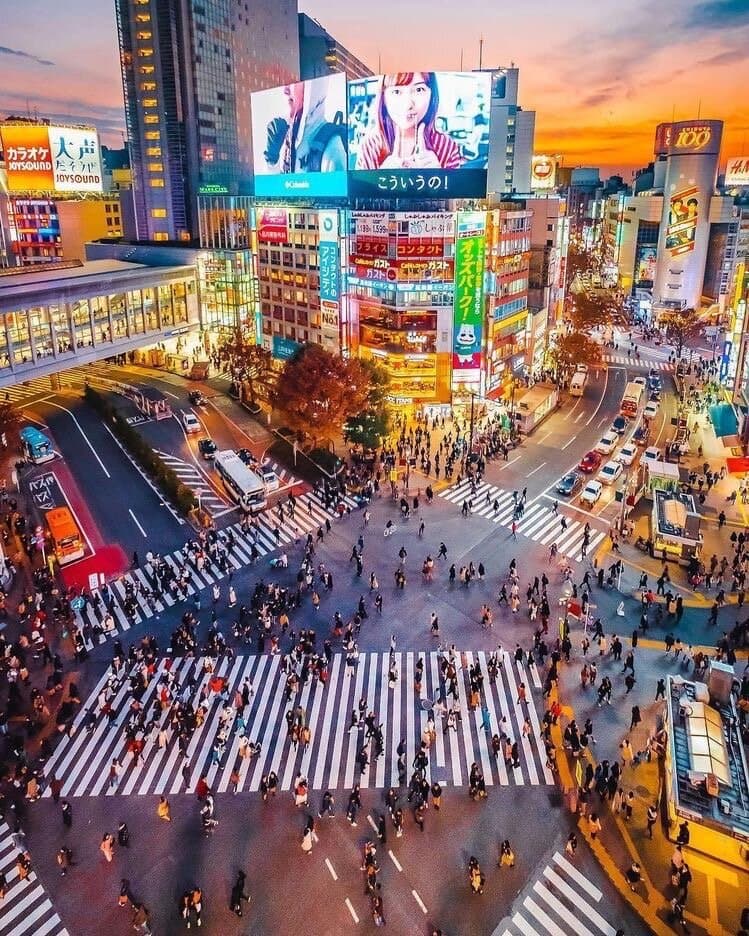
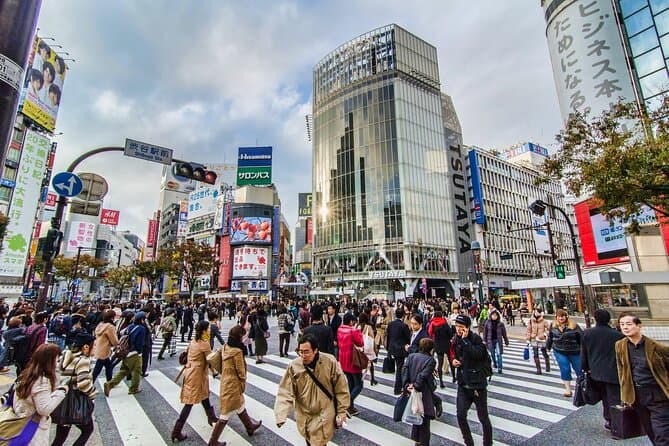
Did you really visit Tokyo if you didn’t take a photo at Shibuya Crossing? Thought to be the world’s busiest pedestrian crosswalk, Shibuya crossing is also home to the bronze statue of Hachikō. The Japanese Akita dog is remembered for his remarkable loyalty and fidelity to his owner, for whom he continued to wait at Shibuya Station every day for nine years following his master’s unfortunate death.
A popular spot to watch the organised chaos is from the second floor of Tsutaya Starbucks.
The best time to visit Shibuya Crossing is around dusk or later as thousands of locals and tourists flock to the area to meet up for food or shopping. Try to snap a long exposure photo of all the people crossing the intersection against the buildings’ neon lights.Read moreMore about Shibuya Crossing
4
Meiji Jingu Shrine
Berhenti: 40 minutes

Sake Barrels @ Meiji Shrine, The Meiji Jingu (Meiji Shrine) is Tokyo’s largest and most famous Shinto Shrine. Located on an area that covers 175 acres on the edge of Shibuya, the precinct holds a huge collection of decorative sake barrels called kazaridaru. Traditionally, sake has been a means to connect the people of Japan and the gods and each year, sake breweries donate sake barrels to the enshrined deities and the sake is used in ceremonies and festivals.
The Meiji Shrine is approximately 10 minutes walk from Harajuku Station. It is open daily from sunrise to sunset and admission to the shrine precinct is free. Please don’t be a douchebag; stay in front of the rope for your photo.Read moreMore about Meiji Jingu Shrine
5
Takeshita Street
Berhenti: 30 minutes
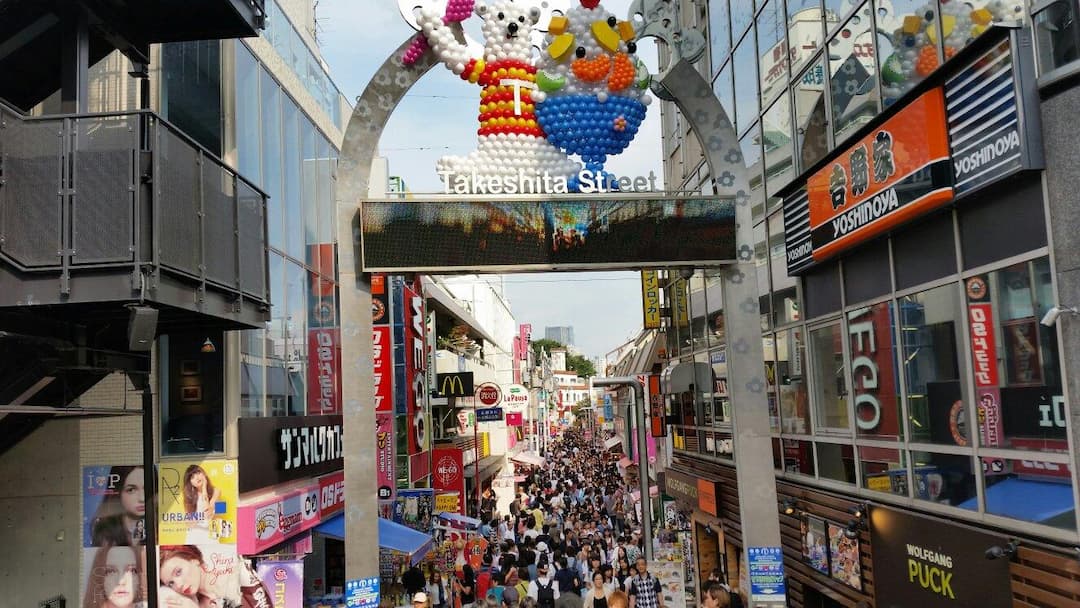
Known as “the cutest street in Tokyo,” Takeshita Street is located in Harajuku. You’ll find cuteness galore, from kawaii clothing shops to pink crepe shops and rainbow cotton candy vendors. The crepe shops are among the most popular local selfie hot spots.Read moreMore about Takeshita Street
6
Omoide Yokocho
Berhenti: 30 minutes

Omoide Yokocho, is a narrow lane made up of small restaurants, bars, and shops. It’s a small slice of Japanese back alley culture. For such a small space, there’s a lot going on. It’s chaotic in the best way possible.
The lanes look like they’re from a bygone era, and contrasted sharply from the modernity of the surrounding Shinjuku District. Omoide Yokocho actually has a second nickname, “Memory Lane”.
This is a reference to the fact that the alley has changed very little over time. The heavenly smell of street food and brightly lit lanterns will draw you in.
This is a great place to capture some old-timey Tokyo Instagram shots, as well as some tasty Japanese food!Read moreMore about Omoide Yokocho
7
Shinjuku Golden Gai
Berhenti: 30 minutes

Shinjuku Golden Gai is a small area in Tokyo with a lot of character. It has a unique and alluring nightlife scene. Small bars are clustered together and weave through narrow alleys and passageways.
The lanes are only wide enough for a single person to pass-through. Because of this compact size, it’s the perfect place to take some pics of Tokyo’s city streets.
You’ll easily be able to capture all the unique elements in one frame. At night, when the lights go out, and the lanterns and neon signs turn on, this area is especially magical. Read moreMore about Shinjuku Golden Gai
8
Imperial Palace
Berhenti: 30 minutes

**This tour does not include access to the inside of the Imperial Palace**
The current Imperial Palace (皇居, Kōkyo) is located on the former site of Edo Castle, a large park area surrounded by moats and massive stone walls in the center of Tokyo, a short walk from Tokyo Station. It is the residence of Japan's Imperial Family.Read moreMore about Imperial Palace
9
Shinjuku Gyoen National Garden
Berhenti: 5 minutes

Adults \500 (Group discount \400)
Seniors (65 and over) \250 ※Valid ID required. Please purchase a ticket at a staffed counter.
Students \250 ※Valid Student ID required. Please purchase a ticket at a staffed counter.
Children (junior high school students /15 and under) FREE
Read moreMore about Shinjuku Gyoen National Garden
10
Tsukiji Fish Market
Berhenti: 10 minutes

Explore the old fish market in Tokyo!Read moreMore about Tsukiji Fish Market
11
Akihabara
Berhenti: 5 minutes
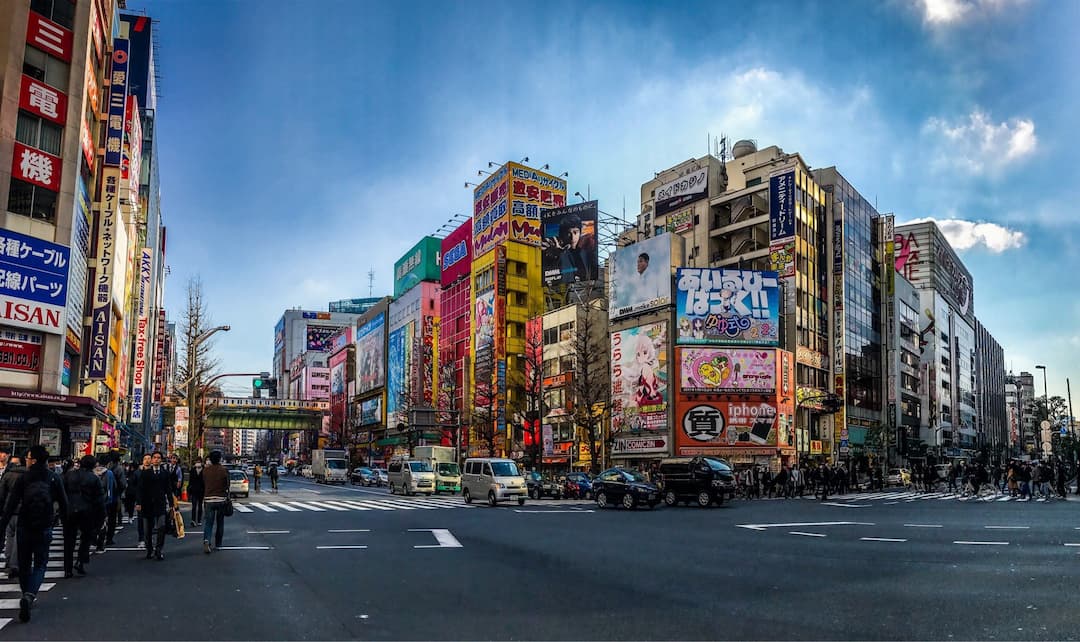
kihabara (秋葉原), also called Akiba after a former local shrine, is a district in central Tokyo that is famous for its many electronics shops. In more recent years, Akihabara has gained recognition as the center of Japan's otaku (diehard fan) culture, and many shops and establishments devoted to anime and manga are now dispersed among the electronic stores in the district. On Sundays, Chuo Dori, the main street through the district, is closed to car traffic from 13:00 to 18:00 (until 17:00 from October through March).Read moreMore about Akihabara
12
Koishikawa Korakuen Garden
Berhenti: 5 minutes

Koishikawa Korakuen (小石川後楽園, Koishikawa Kōrakuen) is one of Tokyo's oldest and best Japanese gardens. It was built in the early Edo Period (1600-1867) at the Tokyo residence of the Mito branch of the ruling Tokugawa family. Like its namesake in Okayama, the garden was named Korakuen after a poem encouraging a ruler to enjoy pleasure only after achieving happiness for his people. Koishikawa is the district in which the garden is located in.Read moreMore about Koishikawa Korakuen Garden
13
Hama Rikyu Gardens
Berhenti: 5 minutes
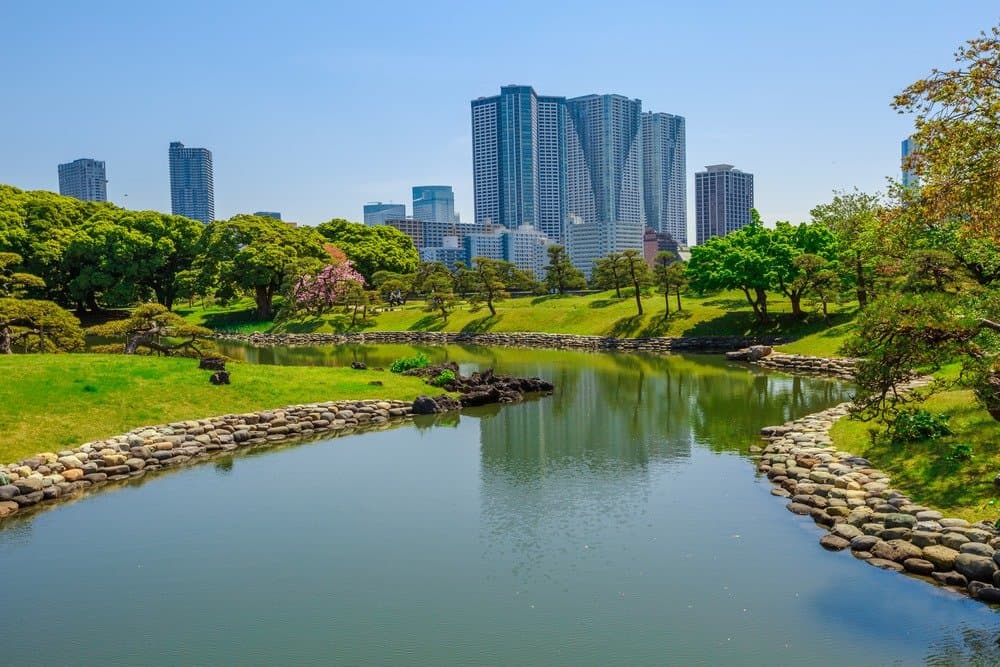
Hama Rikyu (浜離宮, Hama Rikyū), is a large, attractive landscape garden in central Tokyo. Located alongside Tokyo Bay, Hama Rikyu features seawater ponds which change level with the tides, and a teahouse on an island where visitors can rest and enjoy the scenery. The traditionally styled garden stands in stark contrast to the skyscrapers of the adjacent Shiodome district.Read moreMore about Hama Rikyu Gardens
14
Tokyo National Museum
Berhenti: 5 minutes

The Tokyo National Museum (東京国立博物館, Tōkyō Kokuritsu Hakubutsukan) is the oldest and largest of Japan's top-level national museums, which also include the Kyoto National Museum, the Nara National Museum and the Kyushu National Museum. It was originally established in 1972 at Yushima Seido Shrine and moved to its current location in Ueno Park a few years later.
The Tokyo National Museum features one of the largest and best collections of art and archeological artifacts in Japan, made up of over 110,000 individual items including nearly a hundred national treasures. At any one time, about 4000 different items from the permanent museum collection are on display. In addition, visiting temporary exhibitions are also held regularly. Good English information and audio guides are available.Read moreMore about Tokyo National Museum
15
Rikugien Garden
Berhenti: 5 minutes

Rikugien (六義園) is often considered Tokyo's most beautiful Japanese landscape garden alongside Koishikawa Korakuen. Built around 1700 for the 5th Tokugawa Shogun, Rikugien literally means "six poems garden" and reproduces in miniature 88 scenes from famous poems. The garden is a good example of an Edo Period strolling garden and features a large central pond surrounded by manmade hills and forested areas, all connected by a network of trails.Read moreMore about Rikugien Garden
16
Yoyogi Park
Berhenti: 5 minutes

Yoyogi Park (代々木公園, Yoyogi Kōen) is one of Tokyo's largest city parks, featuring wide lawns, ponds and forested areas. It is a great place for jogging, picnicking and other outdoor activities.
Although Yoyogi Park has relatively few cherry trees compared to other sites in Tokyo, it makes for a nice cherry blossom viewing spot in spring. Furthermore, it is known for its ginko tree forest, which turns intensely golden in autumn.Read moreMore about Yoyogi Park
17
Roppongi Hills, Shop & Restaurant
Berhenti: 5 minutes
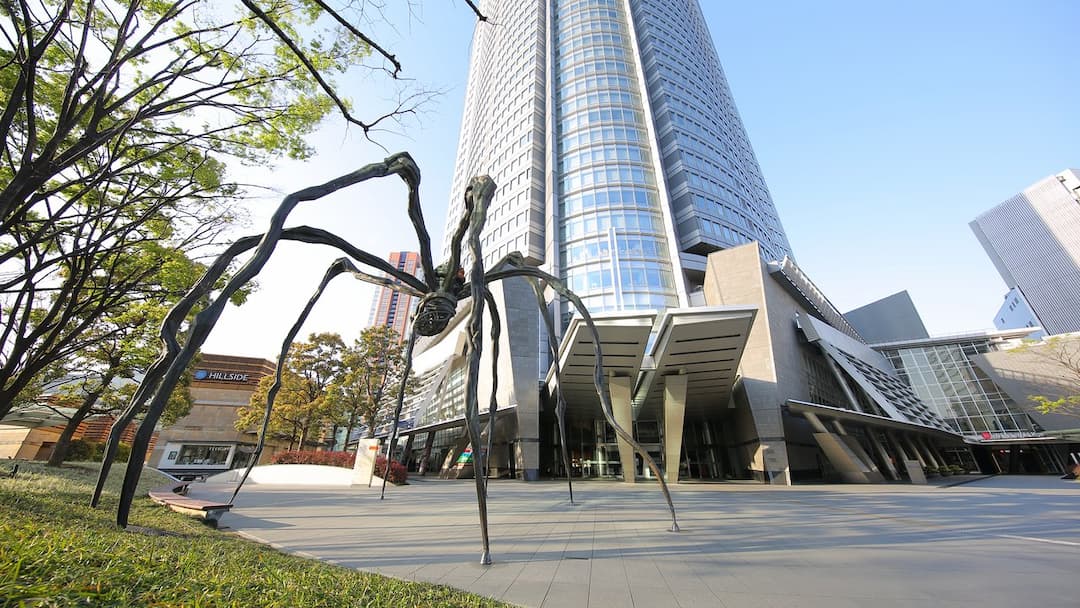
Roppongi Hills is one of the best examples of a city within the city. Opened in 2003 in the heart of Tokyo's Roppongi district, the building complex features offices, apartments, shops, restaurants, a hotel, art museum, observation deck and more. The office floors are home to leading companies from the IT and financial sectors, and Roppongi Hills has become a symbol of the Japanese IT industry.
At the center of Roppongi Hills stands the 238 meter Mori Tower, one of the tallest buildings in the city. While most of the building is occupied by office space, the first few floors have restaurants and shops and the top few floors house an observation deck and modern art museum that are open to the public.Read moreMore about Roppongi Hills, Shop & Restaurant
18
Odaiba District
Berhenti: 5 minutes
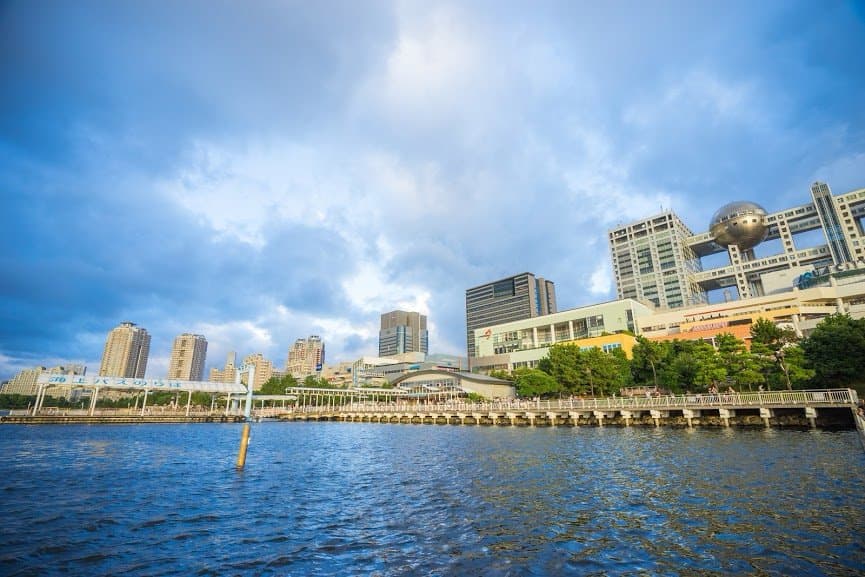
Odaiba (お台場) is a popular shopping and entertainment district on a man made island in Tokyo Bay. It originated as a set of small man made fort islands (daiba literally means "fort"), which were built towards the end of the Edo Period (1603-1868) to protect Tokyo against possible attacks from the sea and specifically in response to the gunboat diplomacy of Commodore Perry.
More than a century later, the small islands were joined into larger islands by massive landfills, and Tokyo began a spectacular development project aimed to turn the islands into a futuristic residential and business district during the extravagant 1980s. But development was critically slowed after the burst of the "bubble economy" in the early 1990s, leaving Odaiba nearly vacant.Read moreMore about Odaiba District
19
Shibamata
Berhenti: 5 minutes

Shibamata (柴又) is a neighborhood on the eastern end of Tokyo, not far from the Edogawa River which is the natural border between Tokyo and Chiba Prefecture. The town retains its old-school charm from yesteryear and is a perfect break away from modern Tokyo. One of the main attractions to see is the Shibamata Taishakuten Temple not far from the station.Read moreMore about Shibamata
20
Nezu
Berhenti: 5 minutes

Having miraculously avoided major damage during world wars and natural disasters, Yanaka and Nezu—two of the neighborhoods that make up shitamachi, Tokyo's old downtown—retain their last-century charm. You'll find historical sites such as Yanaka Cemetery and Nezu Shrine tucked away among shitamachi's narrow back alleys, traditional wooden houses, izakaya pubs, atmospheric coffee shops and retro stores selling old-style sweets and snacks. Here you can slip back in time to a slower-paced, more genteel Tokyo.Read moreMore about Nezu
Ini menyimpulkan lawatan.
Anda bebas meneroka dengan laju anda sendiri dari sini.
Pengembaraan Epik di seluruh dunia
Pengalaman popular