Overview
Meet your host
Itinerary
Sacred Valley VIP (Full Day)
3 (0)
Sacred Valley VIP (Full Day)
3 (0)
Activity Duration (8 hours)
Extreme
Hosted in English
No refund if cancelled
Reserve now & pay later, Secure your spot while staying flexible.
What you'll do
Sacred Valley VIP (Full Day)
Tour Highlight
The Sacred Valley stretches from Pisac in the south to Machu Picchu in the north. This region is a treasure trove of breathtaking mountains, ancient ruins, rushing rivers, vibrant markets, terraced hillsides, delicious food, and warm-hearted people who deeply care for their homeland.
What is included?
- Not wheelchair accessible
What is not included?
- Confirmation will be received at time of booking
- No heart problems or other serious medical conditions
- Most travelers can participate
- This tour/activity will have a maximum of 15 travelers
Meet your host

Golden Cooking Tour
Verified host
Host since 2024
Itinerary
No meal included on this day.
No accommodation included on this day.
Here is the starting point
Chincheros
1
Chincheros
Stop: 30 minutes
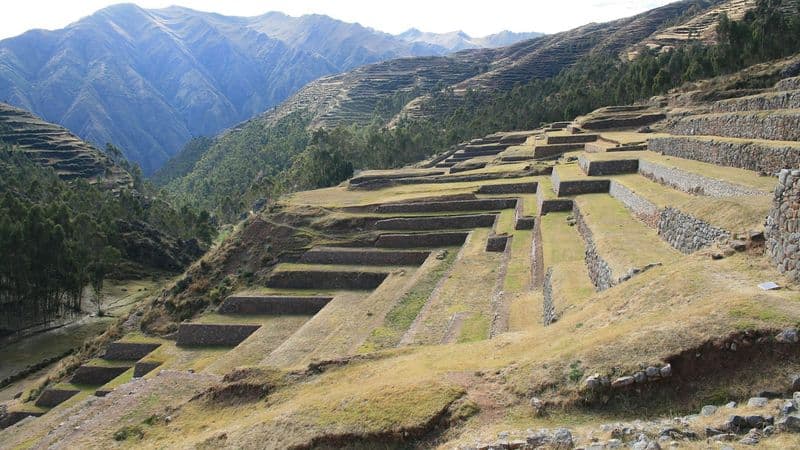
Chinchero is a small Andean Indian village located high up on the windswept plains of Anta at 3765m about 30km from Cusco. There are beautiful views overlooking the Sacred Valley of the Incas, with the Cordillera Vilcabamba and the snow-capped peak of Salkantay dominating the western horizon. Chinchero is believed to be the mythical birthplace of the rainbow. Its major claim to tourism is its colourful Sunday market which is much less tourist-orientated than the market at Pisac. The village mainly comprises mud brick (adobe) houses, and locals still go about their business in traditional dress. The village may have been an important town in Inca times. The most striking remnant of this period is the massive stone wall in the main plaza which has ten trapezoidal niches. The construction of the wall and many other ruins and agricultural terraces (which are still in use) are attributed to Inca Tupac Yupanqui who possibly used Chinchero as a kind of country resort.
In the main plaza an adobe colonial church, dating from the early seventeenth century, has been built upon the foundations of an Inca temple or palace. The ceiling and walls are covered in beautiful floral and religious designs. The church is open on Sundays for mass.
2
Moray
Stop: 60 minutes

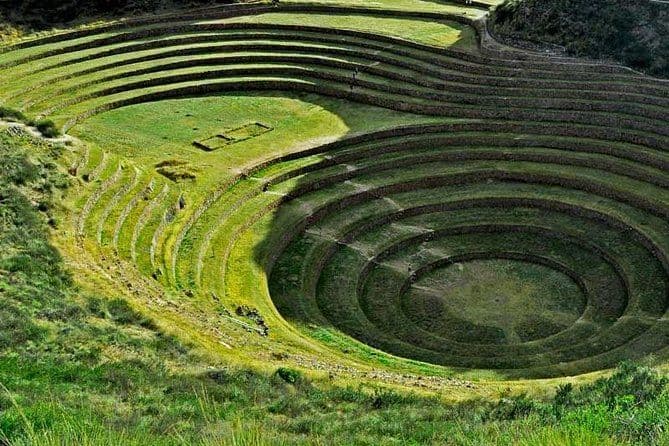
Everywhere you look in Cusco you can see how advanced the Incas were in their agricultural techniques, such as the terracing system and irrigation using aqueducts. In Moray, for example, they used circular terraces that demonstrate the high level of culture the Inca civilization achieved.
Moray is 4.5 miles from the town of Maras and 39 miles from Cusco. The main feature that impresses travelers is its system of circular agricultural terraces, which are up to 330 feet deep. They are build using retaining walls connected by an irrigation system.
Moray can be considered a crop lab– they used the terraces to create micro-climates and grow various products.
3
Maras
Stop: 60 minutes
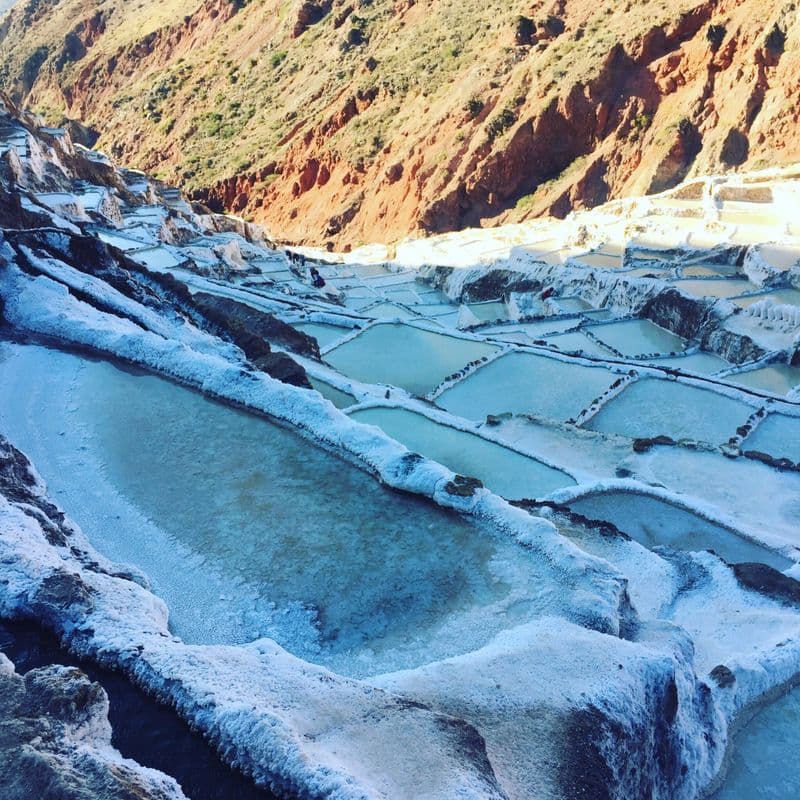
The salt mines, or the famous "salt pools" of Maras are located in the rural community of Pichingoto. This site is highly recommended for photography lovers because of its impressive landscape that stretches out in all of its splendor. It is also perfect for hikers and mountain bikers, since this trail connects the salt mines with the villages of Tarabamba and Pichingoto.
Highlights of this area include the Moray archaeological site, a sort of amphitheater formed of various circular terraces. Also worth visiting is the Sanctuary of Tiobamaba, a colonial church built of adobe that houses paintings from Cusco such as The Last Supper.
4
Ollantaytambo
Stop: 2 hours
5
Pisac
Stop: 60 minutes
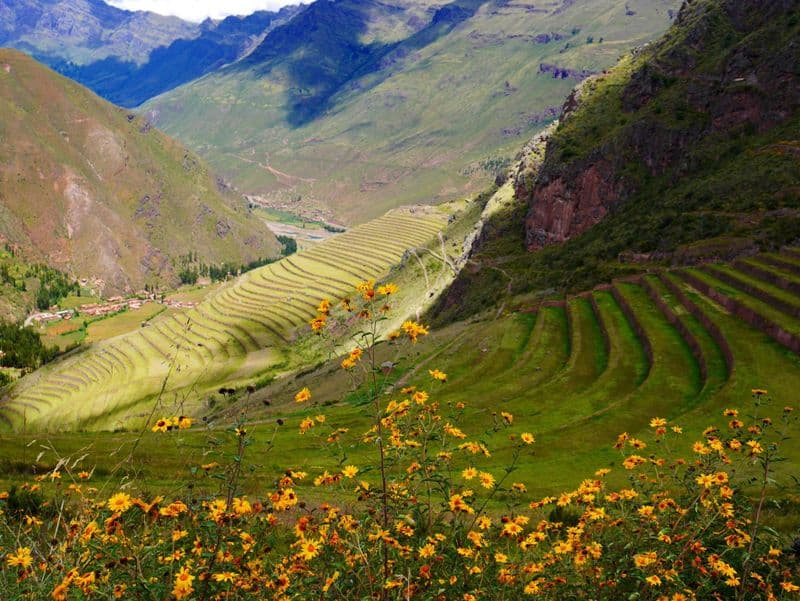
Travelling through the Urubamba Valley, starting at the town of Pisac, enables tourists to visit an archaeological area in the highest mountain areas. Here there are many different buildings, plazas, temples, pools and other structures, all built between the 10th and 11th centuries AD. Inca architecture continues to stun admirers with the technique used to build its enormous walls, palaces and turrets with stone blocks, all done without any type of cement or adhesive.
The Intihuatana solar observatory receives the greatest admiration. Fine quality stone carved into the shape of many hands forming a semi-circle.
The terraces that encircle the mountain are impressive due to the location varying from 3,000-3,450 masl (9,843 - 11,319 fasl). There are 14 different styles of broad terraces. To manage their water supply, the Incas carried out engineering works creating many channels that travel the length of the terraces, and, despite the height of construction, they even included decorative fountains.
Pisac is one of the few archaeological zones with two open tunnels cut into the hills, one which heads north for 15 meters (49 feet) and another 3 meter (10 feet) tunnel that leads to the summit.
This concludes the tour.
You’re free to explore at your own pace from here.
Epic Adventures Across the Globe
Popular Experiences