Overview
Meet your host
Itinerary
Majestic Istanbul: Walking Tour & Sunset Cruise on the Bosphorus
5 (0)
Majestic Istanbul: Walking Tour & Sunset Cruise on the Bosphorus
5 (0)
Activity Duration (7 hours)
Extreme
Hosted in English
Full refund if cancelled up to 24 hours before the experience starts
Reserve now & pay later, Secure your spot while staying flexible.
What you'll do
Explore the majestic city of Istanbul on a guided walking tour. Discover the city's rich history and culture as you stroll through the bustling streets. After the walking tour, enjoy a relaxing sunset cruise on the Bosphorus. Take in the breathtaking views of the city's skyline and the sparkling waters of the Bosphorus. This unique combination of a walking tour and a sunset cruise on the Bosphorus is the perfect way to experience the beauty and charm of Istanbul.
Tour Highlight
Experience the Elegance of Istanbul: A Journey Through History and Luxury on a Bosphorus Sunset Cruise
Join us on a captivating journey through Istanbul, a city where ancient history and vibrant culture intertwine against a backdrop of stunning architecture and the mesmerizing waters of the Bosphorus.
This meticulously curated tour invites you to discover Istanbul's most iconic landmarks, each offering a unique glimpse into the city's rich and diverse heritage.
Embark on an unforgettable journey along the majestic Bosphorus Strait aboard a luxurious yacht, where the magic of Istanbul comes to life in the warm glow of the setting sun.
This exclusive Bosphorus sunset cruise offers a unique perspective of the city, combining breathtaking views, opulent comfort, and a touch of elegance, making for an evening you'll cherish forever.
What is included?
- Not wheelchair accessible
- Stroller accessible
- Near public transportation
- Infants must sit on laps
What is not included?
- Confirmation will be received at time of booking
- Most travelers can participate
- The city tour part is a moderate walking tour around the old city of Sultanahmet
- No interior visit to Hagia Sophia
- Only the first courtyard of Topkapi Palace is visited
- We will use the tram to get to Column Constantine and Grand Bazaar from Sultanahmet Square
- On Fridays, only exterior visits available to the Blue Mosque
- Ladies are recommended to bring scarfs to use while visiting the Blue Mosque
- Grand Bazaar is closed on Sundays
- This tour will have a maximum of 20 travelers
- This experience requires good weather. If it’s canceled due to poor weather, you’ll be offered a different date or a full refund
- This experience requires a minimum number of travelers. If it’s canceled because the minimum isn’t met, you’ll be offered a different date/experience or a full refund
- This tour/activity will have a maximum of 20 travelers
Meet your host

Candid Signature Cruise
Verified host
Host since 2025
Itinerary
No meal included on this day.
No accommodation included on this day.
Here is the starting point
Sultanahmet Meydani
1
Sultanahmet Meydani
Stop: 15 minutes
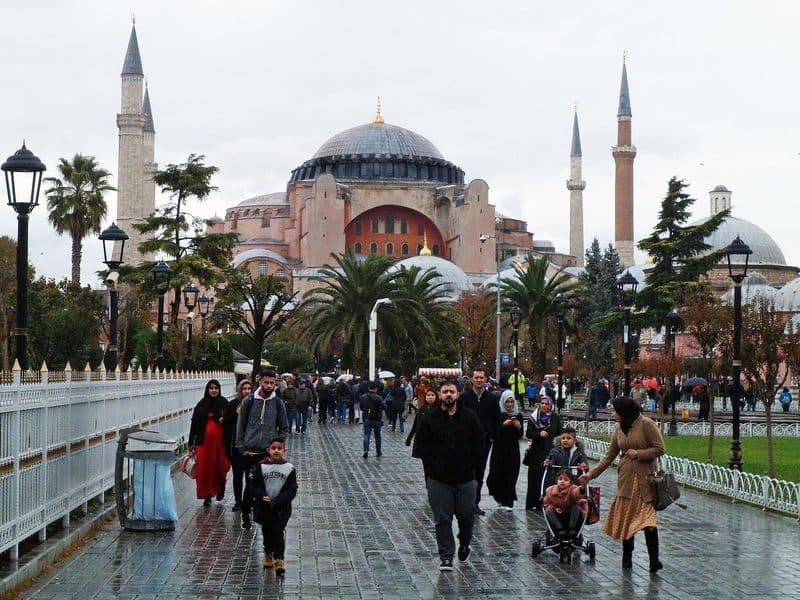
The ancient Hippodrome of Constantinople, now located in Istanbul, Turkey, was a significant public area in the Byzantine capital. Established in the 3rd century by the Roman Emperor Septimius Severus, it was extensively enlarged and embellished by Constantine the Great in the early 4th century. The Hippodrome served as the center of Byzantine public life for over a thousand years, hosting chariot races, celebrations, riots, and political events.
The Hippodrome's U-shaped track and tiered seating could accommodate tens of thousands of spectators, showcasing the city's love for chariot racing, which was the most popular sport of the Byzantine era. Several monumental structures and statues adorned the spina, the central divider of the race track, including the Serpent Column, the Obelisk of Thutmose III, and the Walled Obelisk.
2
Walled Obelisk
Stop: 5 minutes
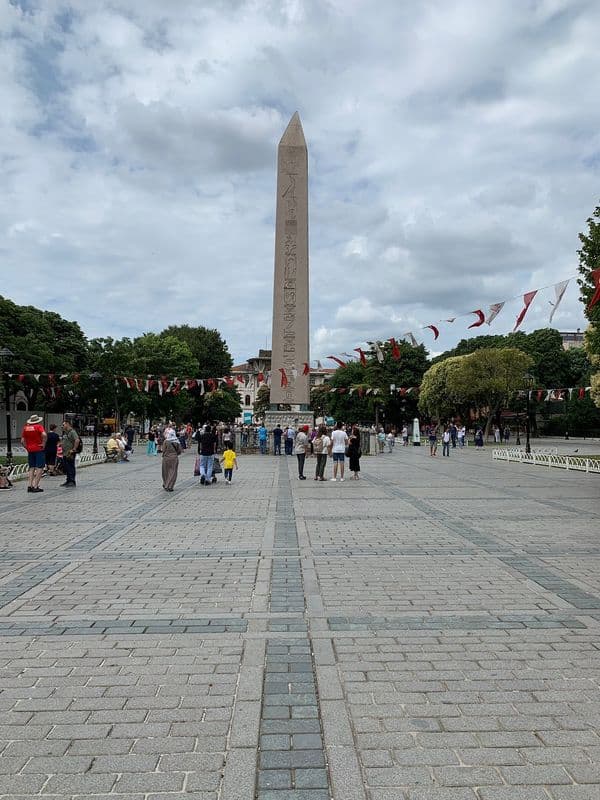
The Walled Obelisk, also known as the Masonry Obelisk, is one of the ancient monuments that still stand in the former Hippodrome of Constantinople, now Sultanahmet Square, in Istanbul, Turkey. Unlike the Egyptian Obelisk of Thutmose III, which is also located in the Hippodrome, the Walled Obelisk is not made of a single piece of stone. Instead, it is constructed from roughly cut stones, which is why it is often called the Masonry Obelisk.
3
Serpent Column
Stop: 5 minutes
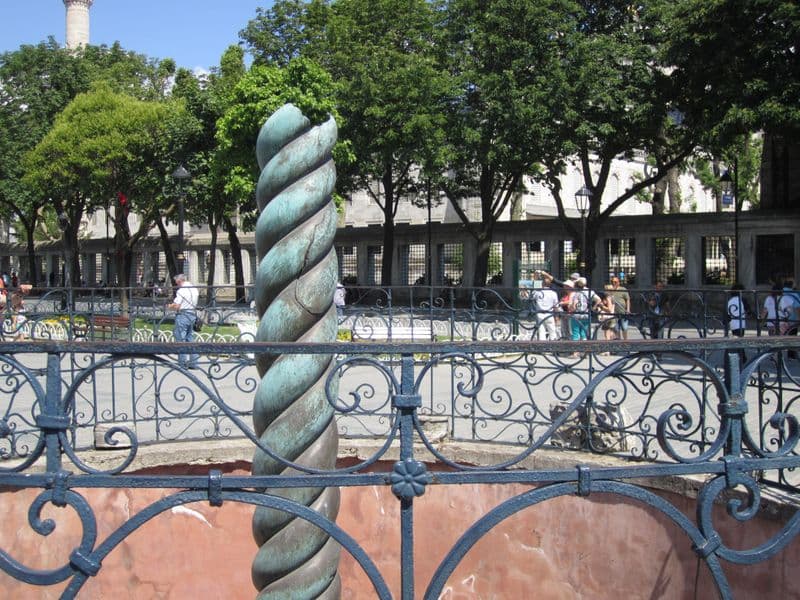
The Serpent Column, also known as the Serpentine Column, is an ancient bronze monument that originally stood at the Temple of Apollo at Delphi in Greece before being relocated to the Hippodrome of Constantinople, now in modern-day Istanbul, Turkey. This column is notable for its unique design: three serpents' heads intertwine to form the column's shaft, which once supported a golden tripod.
The column was created to commemorate the Greek victory over the Persians at the Battle of Plataea in 479 BC. The city-states involved in this battle decided to create a votive offering to thank Apollo for their victory. The tripod was placed atop the intertwined serpents, and the names of the cities that participated in the battle were inscribed on the column.
4
Obelisk of Theodosius
Stop: 5 minutes
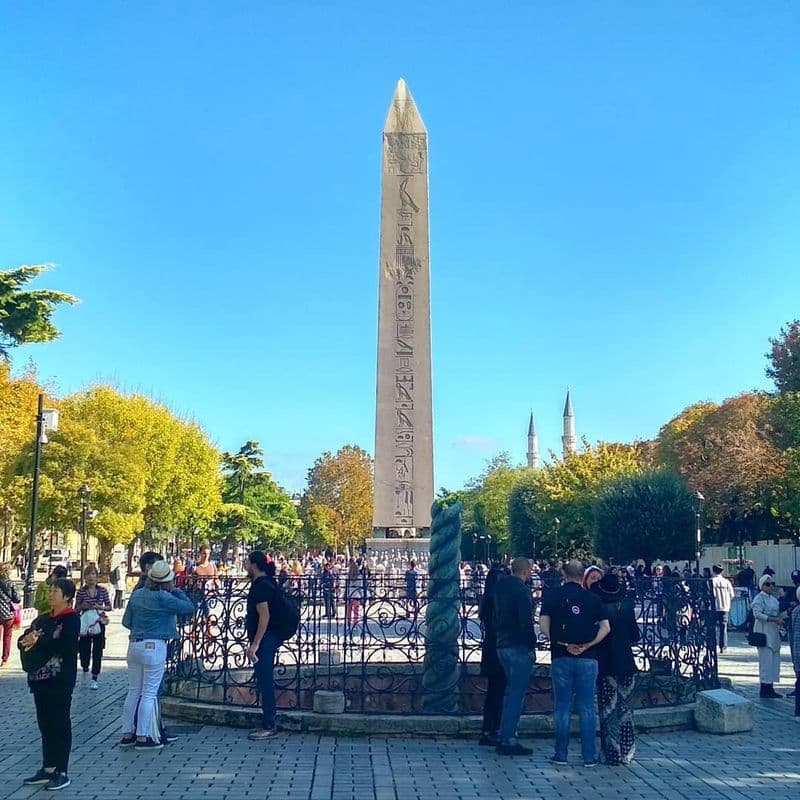
The Obelisk of Theodosius is an ancient Egyptian monument that was re-erected in the Hippodrome of Constantinople, now Istanbul, Turkey, by the Roman emperor Theodosius I in the late 4th century AD. Originally, it was constructed during the reign of Pharaoh Thutmose III around 1450 BC and stood in the Temple of Karnak in Luxor, Egypt.
The obelisk is made of red granite and is about 20 meters (approximately 65 feet) tall, although it was originally much taller before being cut down to its current size for transportation to Constantinople. The inscriptions on the obelisk are in hieroglyphs and celebrate the victories and achievements of Thutmose III.
5
German Fountain
Stop: 5 minutes
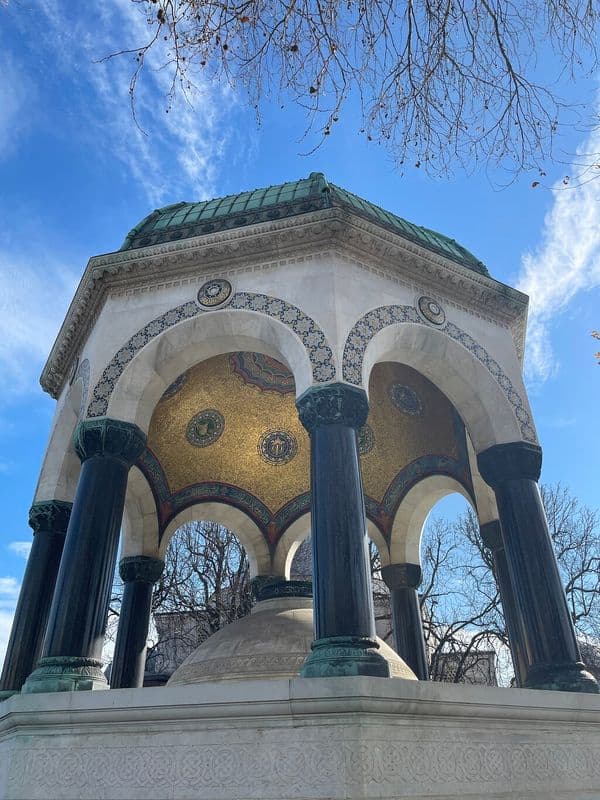
The Obelisk of Theodosius is an ancient Egyptian monument that was re-erected in the Hippodrome of Constantinople, now Istanbul, Turkey, by the Roman emperor Theodosius I in the late 4th century AD. Originally, it was constructed during the reign of Pharaoh Thutmose III around 1450 BC and stood in the Temple of Karnak in Luxor, Egypt.
The obelisk is made of red granite and is about 20 meters (approximately 65 feet) tall, although it was originally much taller before being cut down to its current size for transportation to Constantinople. The inscriptions on the obelisk are in hieroglyphs and celebrate the victories and achievements of Thutmose III.
6
Blue Mosque
Stop: 25 minutes
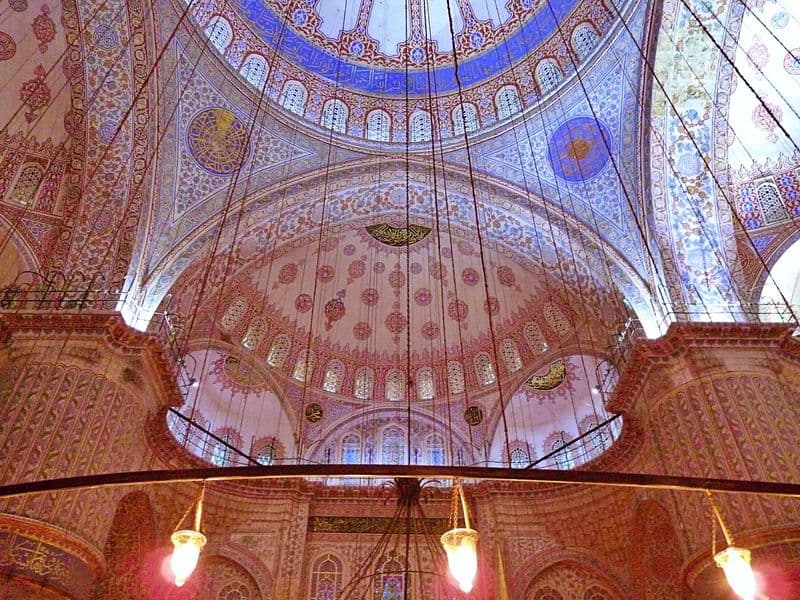
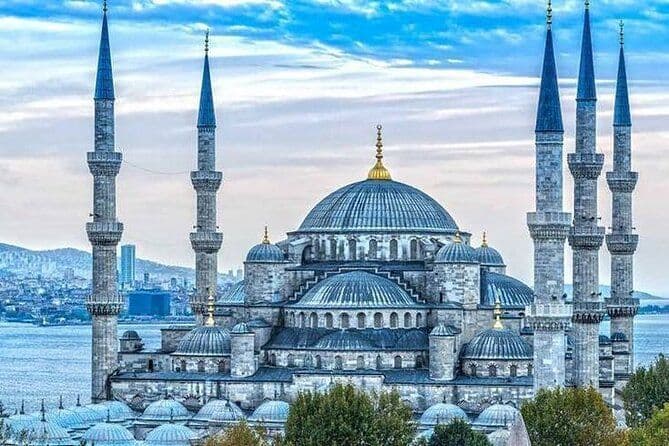
The Blue Mosque, also known as Sultan Ahmed Mosque, is one of Istanbul's most iconic landmarks. It was constructed between 1609 and 1616 during the rule of Sultan Ahmed I. Its name, "Blue Mosque," derives from the blue tiles adorning the interior walls. Located in Istanbul, Turkey, this historic mosque is a stunning representation of classical Ottoman architecture and a significant site of Muslim worship.
Architecturally, the mosque is noted for its harmonious design and majestic proportions. It features a main dome, six minarets, and eight secondary domes, showcasing a blend of Byzantine Christian architecture and traditional Islamic design. The mosque's six minarets were a novel feature at the time of its construction, as most mosques had four, two, or just one minaret. The decision to include six minarets led to some controversy, as it equaled the number at the Masjid al-Haram in Mecca. To resolve this, a seventh minaret was eventually added to the Masjid al-Haram.
7
Hagia Sophia Grand Mosque
Stop: 25 minutes
The Hagia Sophia, whose name means "Holy Wisdom" in Greek, is a monumental architectural masterpiece with a rich history that spans over a millennium. Originally constructed as a cathedral, it has served multiple religious purposes over the centuries.
8
Topkapı Palace
Stop: 30 minutes
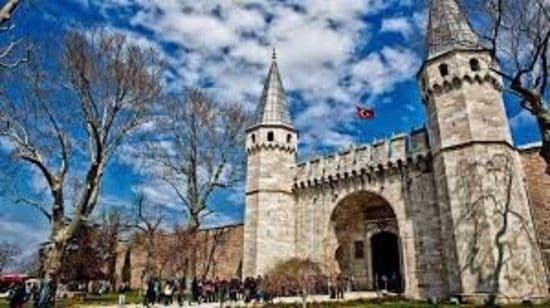
Topkapi Palace, located in Istanbul, Turkey, is a historic palace that served as the main residence and administrative headquarters of the Ottoman sultans for nearly 400 years, from the 15th to the 19th century. Constructed between 1460 and 1478 by Sultan Mehmed II, the conqueror of Constantinople, the palace is a stunning representation of Islamic art and architecture and reflects the opulence and power of the Ottoman Empire during its peak.
The palace complex is expansive, covering approximately 700,000 square meters at its zenith, and is surrounded by four main courtyards and a series of gardens. Each courtyard served different purposes and was progressively more private and exclusive, culminating in the Fourth Courtyard, which was the personal domain of the sultan and his family.
9
Column of Constantine
Stop: 5 minutes
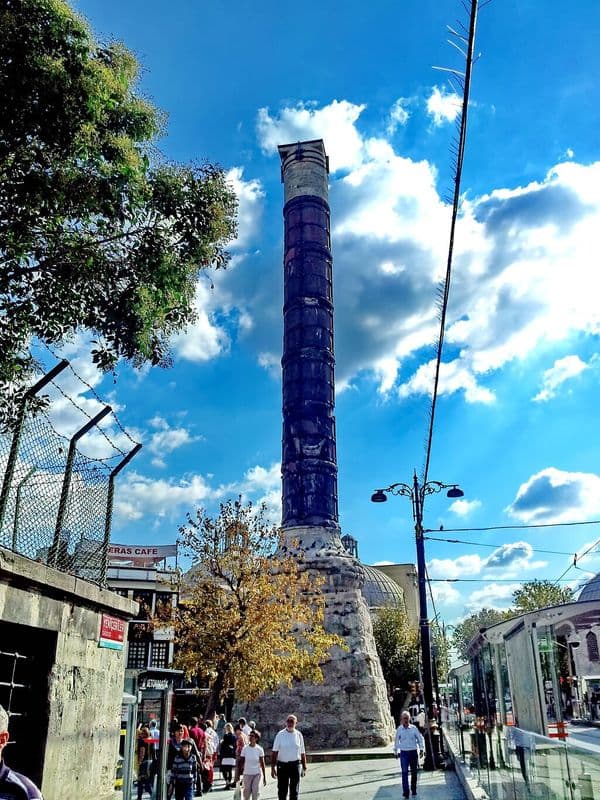
The Column of Constantine, also known as the Burnt Column, is a monumental column situated in Istanbul, Turkey, originally erected to commemorate the dedication of Constantinople as the new capital of the Roman Empire in 330 AD. The column was named after Emperor Constantine the Great, who founded Constantinople (modern-day Istanbul) on the site of the ancient city of Byzantium.
Constructed from porphyry, a type of igneous rock with a purple hue, the column originally stood approximately 50 meters (164 feet) high, including its pedestal and the statue that crowned it. The statue at the top depicted Constantine dressed in the likeness of Apollo, symbolizing the emperor's role as the "sun god" and savior of the city. However, the original statue was lost in the 12th century, and the column has undergone several restorations over the centuries due to damage from fires and earthquakes.
10
Grand Bazaar
Stop: 30 minutes
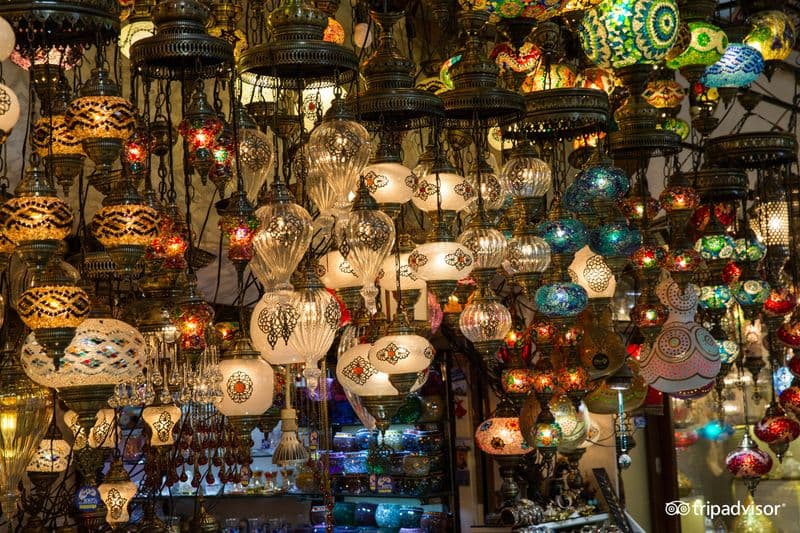
The Grand Bazaar, known as Kapalıçarşı in Turkish, is one of the largest and oldest covered markets in the world, located in Istanbul, Turkey. This sprawling marketplace is a significant landmark that reflects the vibrant and diverse history of Istanbul, offering visitors a rich tapestry of cultural and commercial experiences.
Historical Background:
The Grand Bazaar's construction began in 1455 shortly after the Ottoman conquest of Constantinople, under the order of Sultan Mehmed II. It was initially established to provide economic support to the Hagia Sophia and grew extensively over the centuries, with many additions and renovations. By the 17th century, the bazaar had achieved its final shape, housing thousands of shops on a maze of streets.
11
Suleymaniye Mosque
Stop: 30 minutes
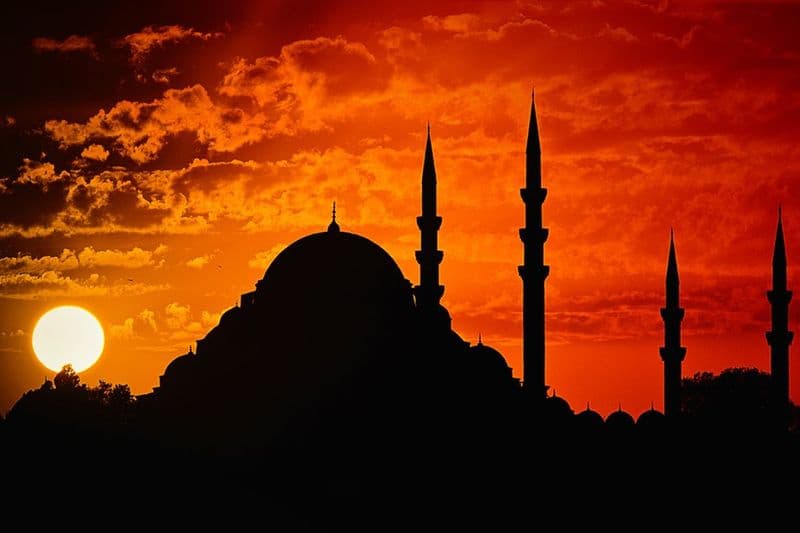
The Süleymaniye Mosque, an exquisite example of Ottoman architecture and one of Istanbul's most prominent landmarks, stands as a testament to the grandeur of the Ottoman Empire at its peak. Designed by the renowned architect Mimar Sinan, the mosque was commissioned by Sultan Süleyman the Magnificent and completed in 1557.
Architectural Significance:
The mosque's design showcases the zenith of Ottoman architectural innovation and aesthetic. Mimar Sinan blended traditional Islamic architecture with Byzantine elements, particularly evident in the mosque's dome, which draws inspiration from the Hagia Sophia. The central dome, soaring approximately 53 meters (174 feet) high and 27.5 meters (90 feet) in diameter, is supported by half-domes and buttresses, illustrating Sinan's mastery of space and structure.
12
Misir Carsisi (Spice Market)
Stop: 15 minutes

The Spice Bazaar, also known as the Egyptian Bazaar (Mısır Çarşısı in Turkish), is one of Istanbul's most vibrant and colorful markets, located in the Eminönü quarter of the Fatih district. It's the second-largest covered shopping complex in the city after the Grand Bazaar and is particularly famous for its wide variety of spices, herbs, sweets, dried fruits, nuts, and other culinary delights.
Historical Background:
The Spice Bazaar was built in the 1660s as part of the New Mosque (Yeni Cami) complex, with revenues intended to support the mosque's maintenance. The name "Egyptian Bazaar" comes from the fact that during the Ottoman era, the bazaar was a major hub for goods coming from Egypt and the wider Ottoman Empire.
The bazaar's architecture is a notable example of Ottoman-era construction, featuring a total of 85 shops lined along an L-shaped, vaulted corridor. The structure is designed with multiple entrances and is easily accessible from different parts of the city.
This concludes the tour.
You’re free to explore at your own pace from here.
Epic Adventures Across the Globe
Popular Experiences